Kindergarten Math Workbook for Early Learning
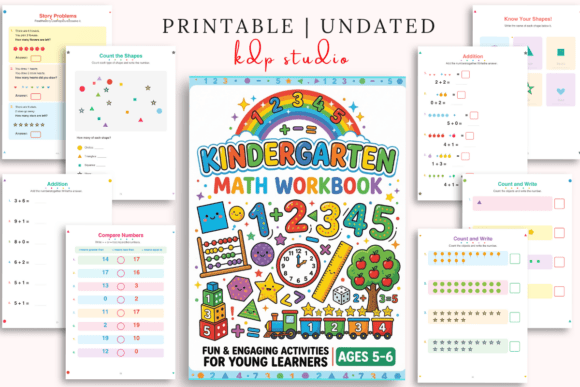
Introducing your child to the world of numbers can be a delightful and rewarding experience with the right tools. A Kindergarten Math Workbook is designed to make this journey both engaging and effective, helping young learners grasp essential math concepts in a structured yet playful way. This 120-page workbook is tailored for children aged 5-6, offering a blend of tracing, counting, and problem-solving activities that build foundational numeracy skills.
For parents and educators, finding educational resources that are both fun and instructive can be challenging. The Kindergarten Math Workbook addresses this need by transforming basic math lessons into an interactive adventure. Whether used as a classroom supplement or at home, it provides a clear path from number recognition to early addition and subtraction, ensuring that every child progresses at their own pace.
What Makes This Workbook Unique
The Kindergarten Math Workbook stands out due to its focus on hands-on learning and visual engagement. Each section is crafted to reinforce key math principles while keeping young minds interested. For instance, the Number Recognition section includes dedicated pages for tracing numbers 1 through 20. These guided tracing paths not only help children recognize numbers but also improve their fine motor skills through repeated practice.
In addition to tracing, the workbook features Count Color activities that link numerical symbols to physical quantities. Through colorful illustrations, children learn to associate numbers with real-world objects, making abstract concepts more tangible and easier to understand.
Building Counting and Cardinality Skills
One of the core components of early math education is developing a strong understanding of counting and cardinality. The Kindergarten Math Workbook includes exercises that encourage children to identify how many items are present in different arrangements. These activities help them grasp the concept that the number of items remains the same regardless of their arrangement or spacing.
The introduction of ten frames on pages 116-117 further supports this learning process. By using a ten-frame system, children can visualize numbers in relation to a full set of ten, which lays the groundwork for understanding place value and more complex arithmetic operations later on.
Another valuable feature is the Missing Numbers activity, which challenges children to complete number sequences. This helps them develop logical thinking and reinforces their understanding of numerical order. As they progress through these exercises, they gain confidence in recognizing patterns and filling in gaps, which are essential skills for future math learning.
Exploring Shapes and Spatial Relationships
Beyond numbers, the Kindergarten Math Workbook introduces children to shapes and spatial relationships. Understanding shapes is crucial for developing geometry skills and spatial reasoning, which are important in various areas of learning, including science and art.
The workbook includes activities that ask children to identify, name, and draw different shapes. These exercises not only enhance their geometric knowledge but also encourage creativity as they explore how shapes can be combined to form new figures. This kind of exploration fosters a deeper appreciation for math as a creative and practical subject.
Supporting Educators and Parents
For educators and parents, the Kindergarten Math Workbook offers a reliable resource that simplifies lesson planning and provides consistent practice opportunities for young learners. Its structured approach ensures that each concept is introduced gradually, allowing children to build upon their previous knowledge without feeling overwhelmed.
Additionally, the workbook’s vibrant visuals and interactive elements make it easy to integrate into daily routines. Whether you're looking for a supplement to classroom instruction or a tool for at-home learning, this workbook provides a comprehensive and flexible solution. It also allows for personalized learning, as children can work at their own pace and revisit challenging topics as needed.
While the Kindergarten Math Workbook is highly effective for most children, it's important to consider individual learning styles and needs. Some children may benefit from additional support or alternative teaching methods. In such cases, combining the workbook with other resources like educational games or manipulatives can create a more well-rounded learning experience.
Encouraging a Love for Math
Early exposure to math through engaging and meaningful activities can shape a child’s attitude toward the subject. The Kindergarten Math Workbook encourages a positive mindset by making learning enjoyable and accessible. When children see math as a fun and rewarding challenge rather than a chore, they are more likely to approach future academic tasks with confidence and enthusiasm.
By incorporating play-based learning strategies, the workbook helps children develop not only mathematical skills but also critical thinking, problem-solving, and perseverance. These qualities are essential for success in all areas of life and will serve them well beyond the classroom.
Whether you're an educator seeking to enhance your curriculum or a parent looking for a quality learning tool, the Kindergarten Math Workbook offers a valuable investment in your child’s future. With its thoughtful design and emphasis on foundational skills, it provides a solid foundation for lifelong learning and academic achievement.