🧠 CBT Cognitive Processing Prompts: A Practical Tool for Real-World Thinking
Have you ever caught yourself spiraling into a loop of negative thoughts, only to realize later that those thoughts were based on assumptions or distortions? That’s where CBT Cognitive Processing Prompts can make a real difference. This structured collection of prompts is designed to help you step back from your thinking, challenge unhelpful patterns, and build more balanced perspectives—without the fluff or generic advice.
What Are CBT Cognitive Processing Prompts?
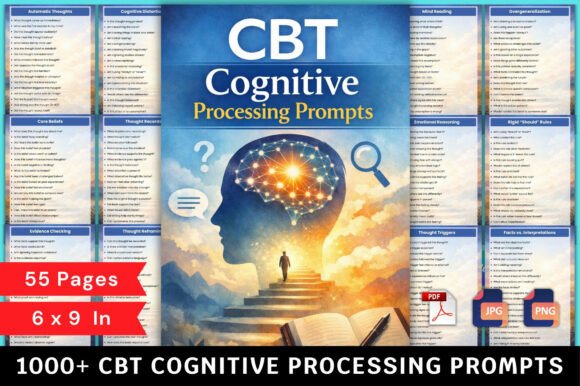
CBT Cognitive Processing Prompts are not just another self-help journal or list of generic questions. They’re a curated set of 1000+ guided prompts rooted in Cognitive Behavioral Therapy (CBT) principles. Each prompt is crafted to guide you through a specific cognitive process: identifying automatic thoughts, examining core beliefs, challenging cognitive distortions, reframing unhelpful interpretations, and building healthier thinking patterns over time.
Whether you're dealing with anxiety, stress, self-doubt, or emotional overwhelm, these prompts provide a clear framework to explore your thoughts in a structured way. And if you're a therapist, coach, or counselor, they offer a powerful tool to support clients with consistent, actionable exercises.
Where and When Can You Use These Prompts?
The beauty of CBT Cognitive Processing Prompts is their flexibility. Here are a few common scenarios where they can be incredibly useful:
- Daily reflection: Use them as part of a morning or evening routine to check in with your mindset and catch any unhelpful thoughts before they spiral.
- Stress management: When feeling overwhelmed by work, relationships, or life events, use prompts to pause, reflect, and reframe your perspective.
- Creative blocks: If you're an entrepreneur, writer, or artist stuck in a creative rut, these prompts can help untangle mental clutter and bring clarity.
- Therapy sessions: Therapists can integrate these prompts into sessions to help clients explore their thoughts in a safe, structured environment.
- Personal development: Whether you're working on confidence, resilience, or emotional regulation, these prompts support gradual, sustainable change.
Real-Life Use Cases and Benefits
Let’s look at how different people might use CBT Cognitive Processing Prompts in their daily lives:
Entrepreneurs and Business Owners
Running a business can be stressful, especially when facing setbacks or uncertainty. An entrepreneur might use prompts like:
- "What is the evidence for and against my belief that I'm failing?"
- "Is there a more balanced way to interpret this situation?"
- "What would I tell a friend in this situation?"
These questions help shift focus from fear-based thinking to more realistic, solution-oriented perspectives.
Parents and Caregivers
Caregiving often comes with high expectations and emotional demands. A parent struggling with self-doubt might ask themselves:
- "Am I overestimating the impact of my mistakes?"
- "What facts support or contradict my current thought about being a 'bad' parent?"
- "How might I respond differently if I believed in my ability to grow and learn?"
This kind of self-reflection can help reduce guilt and foster self-compassion.
Students and Educators
Students dealing with academic pressure or imposter syndrome can benefit from prompts that help them identify and challenge negative self-talk. For example:
- "What would I say to someone else in this situation?"
- "Is there a way to view this challenge as an opportunity rather than a threat?"
- "What steps can I take to gather more information and reduce uncertainty?"
These prompts encourage students to move from self-criticism to constructive problem-solving.
What to Consider Before Using CBT Cognitive Processing Prompts
While CBT Cognitive Processing Prompts are powerful tools, it's important to approach them with intention. Here are a few things to keep in mind:
- Consistency matters: Like any skill, cognitive restructuring takes practice. Try using a few prompts regularly rather than jumping into all 1000 at once.
- Context is key: Choose prompts that align with your current challenges or goals. Not every prompt will be relevant to every situation.
- Combine with other strategies: These prompts work best when paired with other CBT techniques like behavioral activation, relaxation training, or mindfulness.
- Seek support when needed: If you're struggling with deep-seated issues or complex emotions, consider working with a licensed therapist or counselor.
Why This Approach Works
CBT Cognitive Processing Prompts don’t just ask you to think differently—they help you do it. By guiding you through each stage of cognitive processing—identification, analysis, and restructuring—you’re given the tools to transform how you relate to your thoughts over time.
It’s not about eliminating negative thoughts but learning how to respond to them with curiosity, compassion, and clarity. That’s the real power of these prompts: they turn abstract concepts into practical, everyday tools for better thinking and living.
If you're ready to take control of your mind and build a calmer, clearer way of thinking, CBT Cognitive Processing Prompts could be the starting point you’ve been looking for.