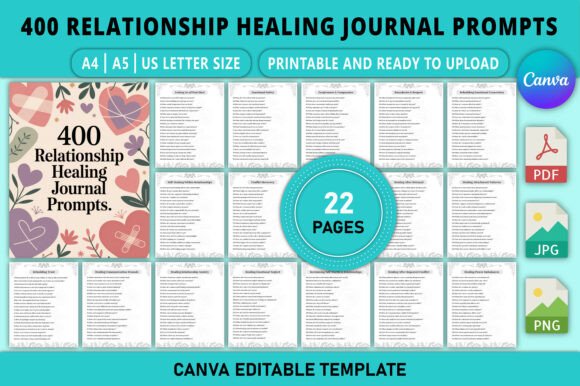
400 Relationship Healing Journal Prompts for Emotional Growth and Connection
Relationships are complex, and healing from emotional wounds often requires intentional reflection and action. For those seeking tools to navigate this journey, the 400 Relationship Healing Journal Prompts offer a structured approach to self-exploration, communication, and growth. This journal is designed to support individuals and couples in rebuilding trust, fostering deeper connection, and developing healthier patterns of interaction.
The prompts cover a wide range of topics, including forgiveness, emotional safety, boundaries, conflict resolution, and self-worth. Each entry invites users to reflect on their experiences, emotions, and intentions, making it a valuable resource for personal use or as part of therapy sessions. The journal's flexibility allows users to customize the content and design using Canva, ensuring that it aligns with their personal style or brand identity.
Why Consider 400 Relationship Healing Journal Prompts?
There are several reasons why someone might be interested in using these journal prompts. First, they provide a guided framework for exploring difficult emotions and past hurts without the pressure of starting from scratch. This can be especially helpful for people who feel overwhelmed by the process of healing or unsure where to begin.
Second, the prompts encourage consistent reflection, which is essential for long-term emotional recovery. By engaging with these questions regularly, users can track their progress, identify patterns, and make meaningful changes over time. Additionally, the journal's focus on communication and mutual respect makes it a useful tool for couples looking to improve their relationship dynamics.
Another benefit is the ability to personalize the journal through Canva. Users can adjust fonts, colors, and layouts to suit their preferences, making the experience more engaging and tailored to their needs. This level of customization also makes the journal a practical choice for creators looking to produce print-ready materials for KDP or other platforms.
Benefits and Tradeoffs
The primary benefit of using these journal prompts is the opportunity for deep self-reflection and emotional healing. They help users articulate their thoughts, process painful experiences, and develop healthier ways of relating to others. The structured nature of the prompts ensures that users do not get stuck in unproductive rumination but instead move toward constructive insights and actions.
However, there are some tradeoffs to consider. While the prompts are comprehensive, they may not address every individual's unique situation or needs. Some users may find that additional guidance from a therapist or counselor is necessary, particularly if dealing with severe trauma or complex emotional issues. Additionally, the effectiveness of the journal depends on the user's commitment to regular engagement and honest reflection.
Another consideration is the need for digital skills when customizing the journal in Canva. While this feature offers flexibility, it may be a barrier for users who are less familiar with design software. Fortunately, Canva provides user-friendly templates and tutorials to help even beginners create professional-looking designs.
Situations Where This Journal Is a Strong Fit
The 400 Relationship Healing Journal Prompts are well-suited for individuals and couples who are committed to working through relationship challenges. It is ideal for those who want to explore their emotions, improve communication, and build stronger connections with their partners. It can also be beneficial for people undergoing therapy, as it complements clinical sessions by providing a space for ongoing reflection and practice.
This journal is particularly effective for those who prefer a self-directed approach to healing. Whether used alone or with a partner, the prompts encourage open dialogue, accountability, and empathy. It is also a good fit for people who value structure and consistency in their personal development journey.
When Alternatives May Be Worth Considering
While the 400 Relationship Healing Journal Prompts offer many advantages, there may be situations where alternative approaches are more appropriate. For example, individuals dealing with severe mental health issues such as depression, anxiety, or post-traumatic stress disorder (PTSD) may benefit more from professional counseling or specialized therapeutic interventions.
Additionally, those who require more interactive or group-based healing methods, such as couples' workshops or support groups, may find that these settings provide better opportunities for connection and feedback. In such cases, combining the journal with other resources could enhance the overall healing experience.
Users who are not comfortable with written reflection or prefer more hands-on activities may also find alternatives such as art therapy, movement-based practices, or mindfulness exercises to be more effective. Ultimately, the best approach will depend on the individual's preferences, needs, and circumstances.
Practical Insights for Decision-Making
Before committing to the 400 Relationship Healing Journal Prompts, it's important to evaluate whether the goals and expectations align with what the journal offers. Consider the following questions:
- Am I looking for a structured yet flexible tool to guide my healing journey?
- Do I have the time and motivation to engage with the prompts regularly?
- Will the ability to customize the journal in Canva add value to my experience?
- Are there any specific areas of my relationship that I want to focus on, such as trust, communication, or emotional safety?
If the answers to these questions indicate that the journal fits your needs, then it may be a worthwhile investment. However, if you're uncertain or have different priorities, exploring other options such as therapy, books, or online courses may be more suitable.
In conclusion, the 400 Relationship Healing Journal Prompts provide a thoughtful and customizable resource for anyone seeking to heal, grow, and strengthen their relationships. Whether used as a personal tool or shared with a partner, it offers a pathway to greater understanding, connection, and emotional resilience.